Port & Ship Accessibility Services
Information about the accessibility services available
Access and Arrival at the Port
Access to the Port
Passenger Terminal
Main entrance accessibleDrop-off area available
Route Considerations and Potential Obstacles
In the Port of Kotor, the standard disembarkation route starts from the
vessel’s gangway and proceeds along the pier toward the ort terminal and
exit gates. The gangway is equipped with handrails, but the incline can
become steep depending on water level and vessel position, which may pose
difficulties for wheelchair users and passengers with limited mobility.
The pier surface is generally paved, but in several areas the stones are
uneven, with small gaps that may make movement harder for mobility aids.
Certain sections have curbs or slight gradients without continuous curb
ramps. Pedestrian space is shared with service vehicles in some zones,
requiring additional awareness.
In wet weather smooth stone areas can become slippery, increasing the risk
for people with reduce mobility or balance impairments. Temporary barriers
or narrow points may occur during peak passenger movements, sometimes
requiring short detours.
Accessibility Features and Support
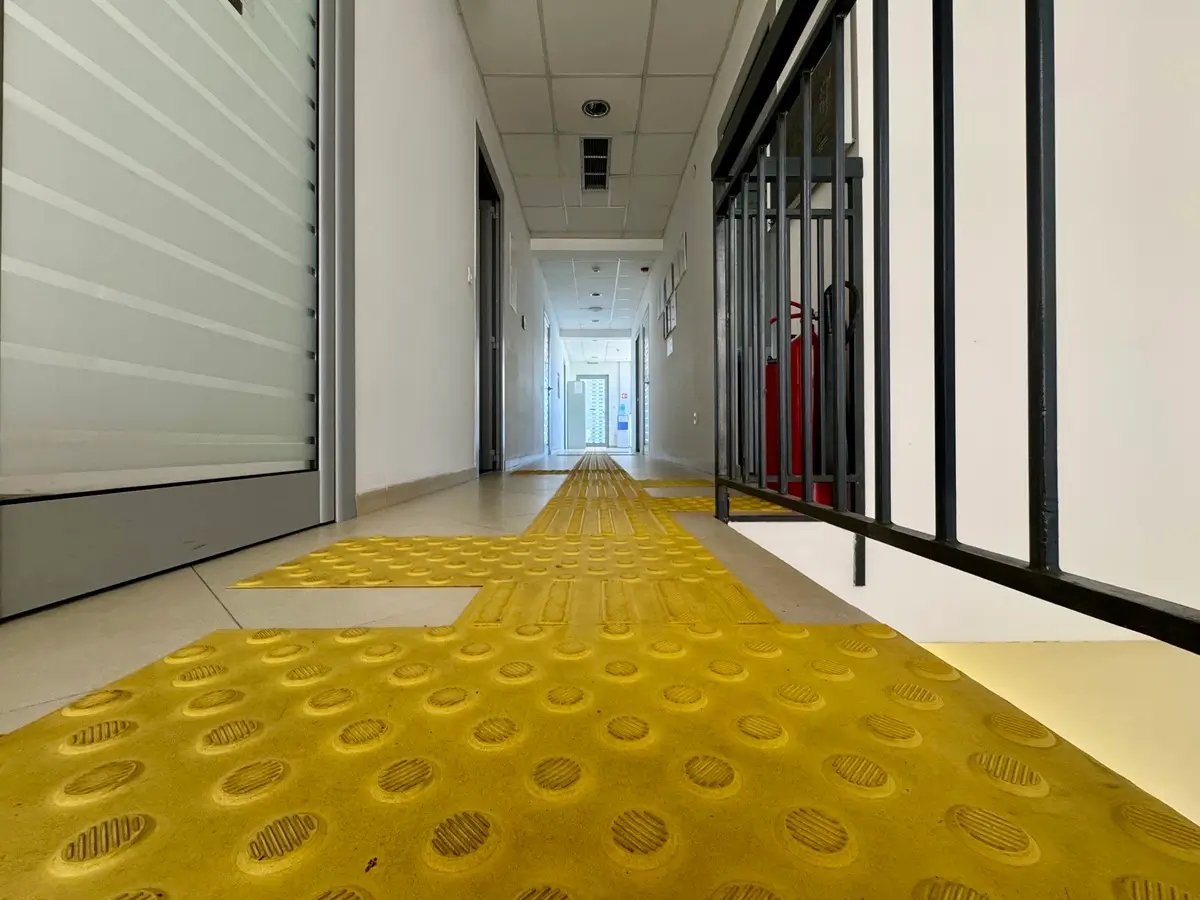
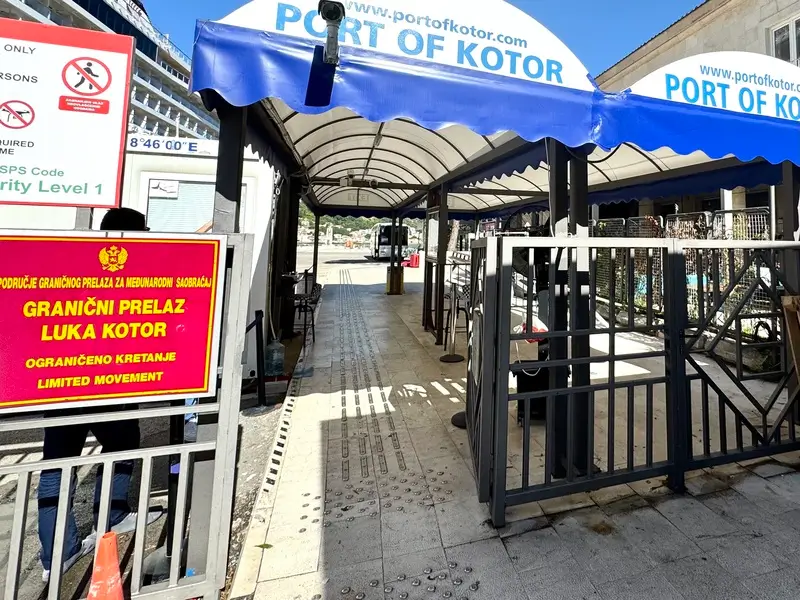
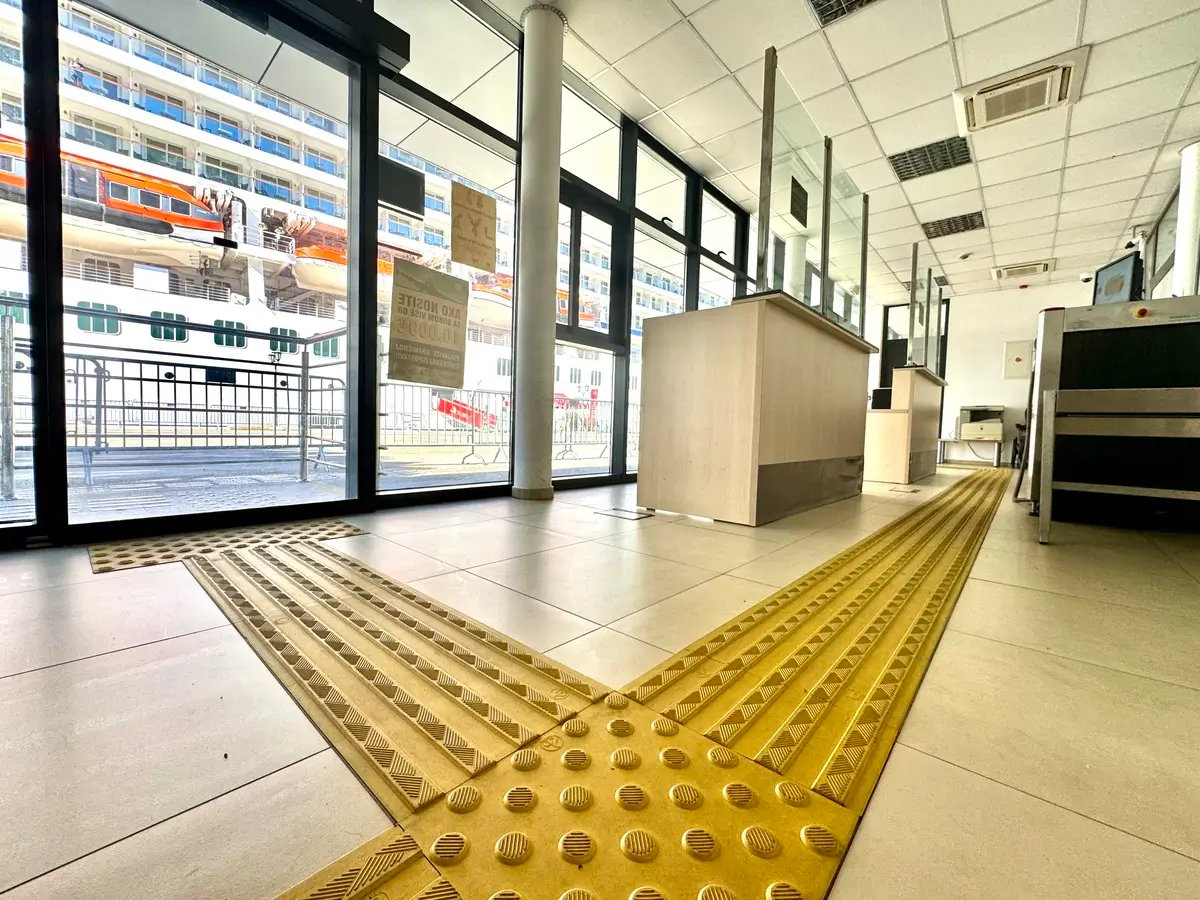
Most routes to boarding areas feature smooth surfaces with tactile guidance strips for visually impaired passengers. Port staff are trained and available to provide guidance and assistance navigating around temporary obstacles or crowds. Weather protection is available through covered waiting areas near some boarding points, though some dock access areas remain uncovered.
Accessible Sanitary Facilities (from the port)
Location and Signposting
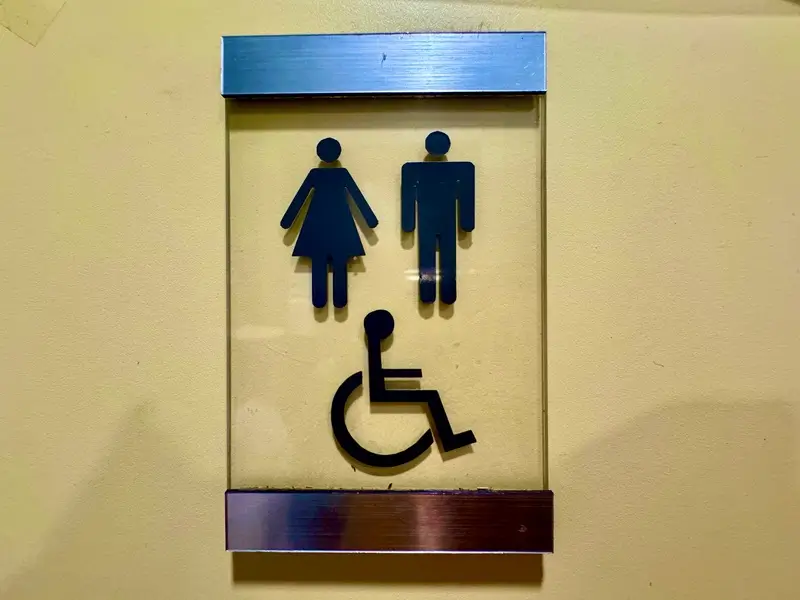
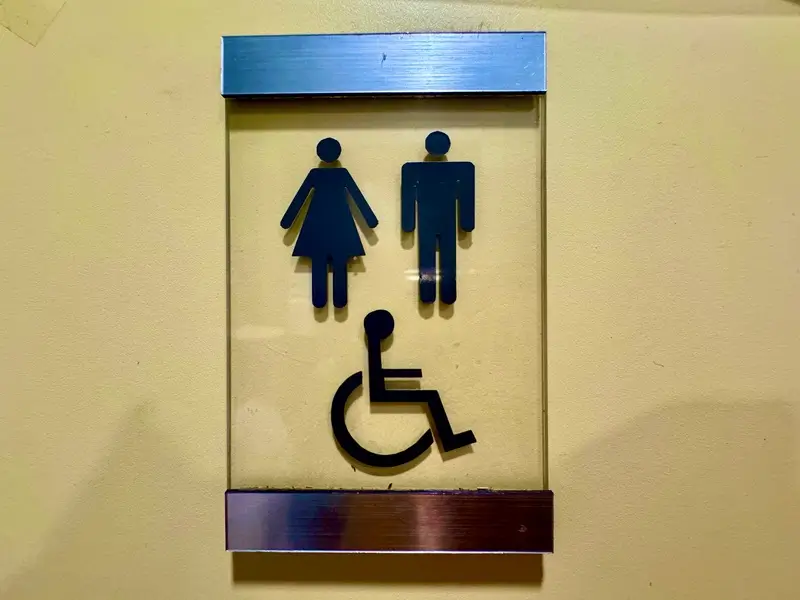
Accessible toilet facility is strategically located on the ground level of the port terminal building: Toilet is clearly marked with international wheelchair symbols measuring 20cm x 30cm, positioned at 1.5m height for visibility. Signs feature simple pictograms and Braille text./p>
Door Specifications and Access
Accessible toilet doors feature mechanic opening systems for manual usage with a handrail on 90cm height. Doors are 95cm wide, opening outward to ensure wheelchair clearance. The door threshold is completely level with no raised edges, allowing smooth wheelchair access without assistance.
Attendant Access and Maneuvering Space
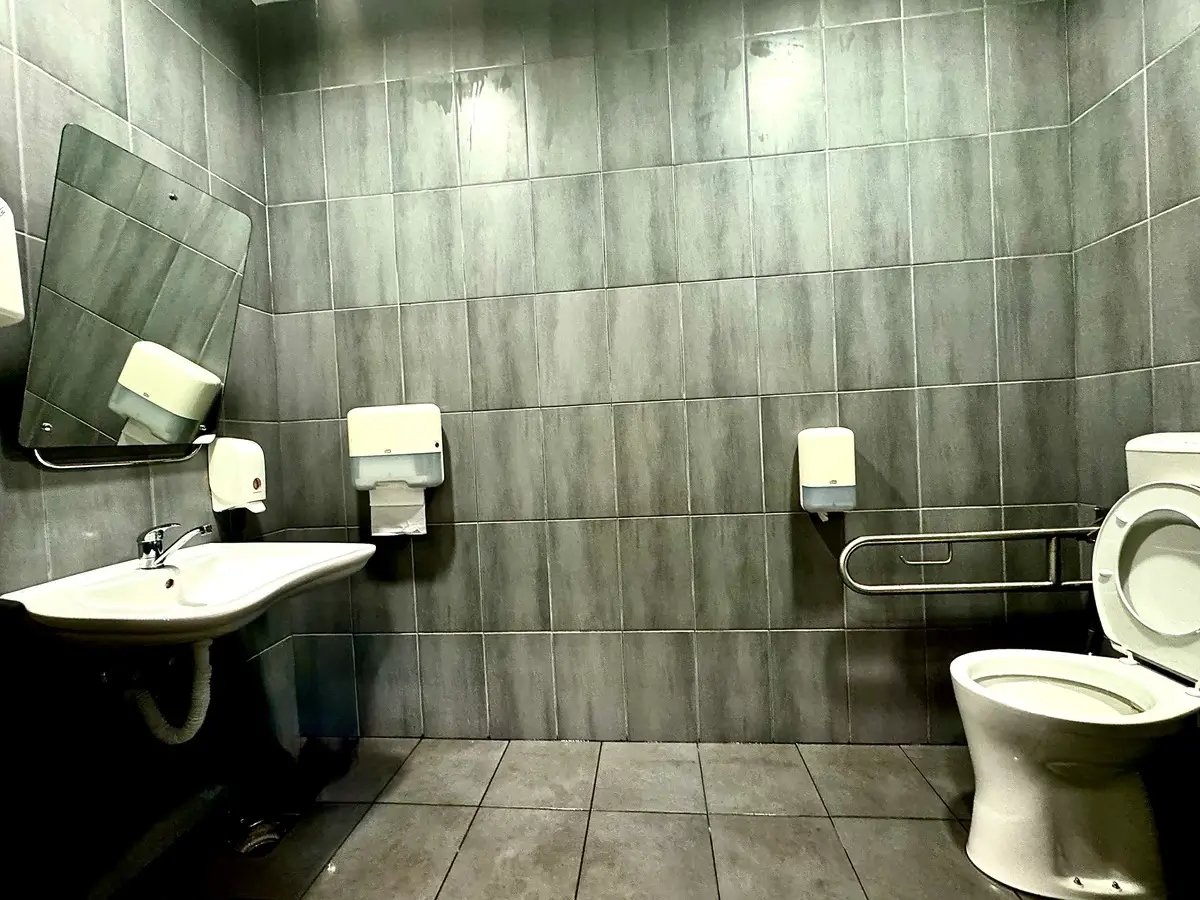
Toilet facility provides generous space for both wheelchair users and attendants, with 2.2m x 2.4m interior dimensions allowing complete wheelchair rotation and side-by-side access for caregivers when needed.
Accessible Toilets
2.2m x 2.4m with 1.5m turning circle clearance
Trained Staff
Available assistence on the spot
Accessible Contact Zone
Tactile path from port to near bus station
Inudction Loop
Accessible counters
Toilet Adaptations
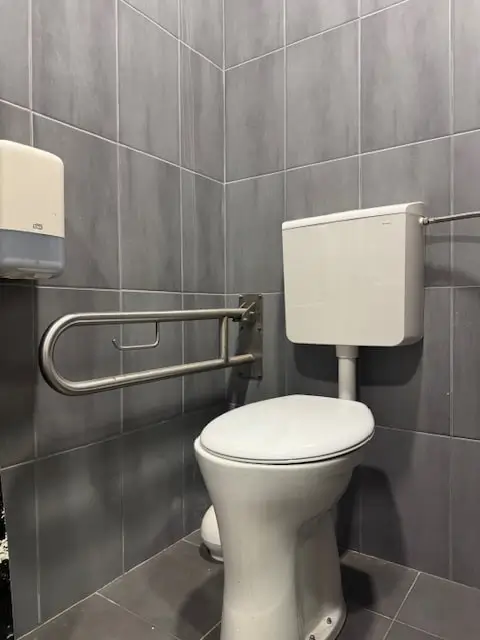
Toilet seat at 48cm height with grab bars on both sides (80cm horizontal, 70cm vertical), manual flush bar, and 1.2m clear transfer space on the left side with fold-down transfer seat.
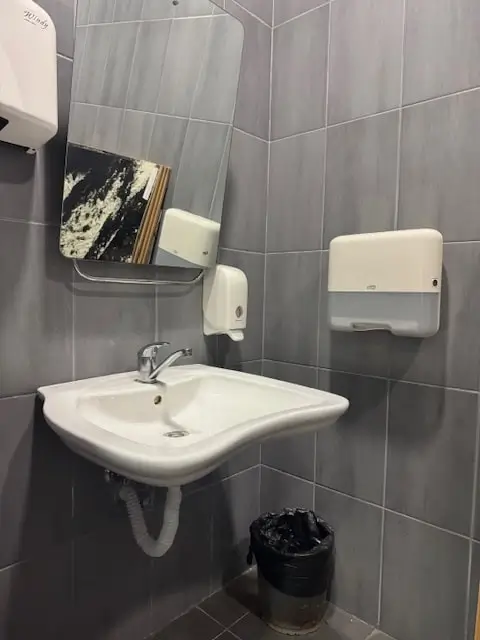
Sink & Mirror Features
Wall-mounted sink at 80cm height with 70cm knee clearance underneath, angled mirror tilted 10° for seated visibility, lever-operated faucets, and soap dispensers at 90cm height.
Complete Equipment Specifications
Toilet facility includes: toilet with grab bars on both sides (horizontal at 80cm, vertical at 70cm, extending 12cm beyond toilet front), wall-mounted sink at 80cm height with 70cm knee space clearance, angled mirror positioned for seated visibility, lever-operated water faucets, automatic soap and paper towel dispensers at 90cm height, coat hook at 120cm height, non-slip flooring throughout, dedicated diaper disposal unit and clear signage.
Operating Hours
Open 24/7
Contact Person
Port Accessibility Coordinator - Contact details displayed at info desk and facility entrances
Custom and police Counter
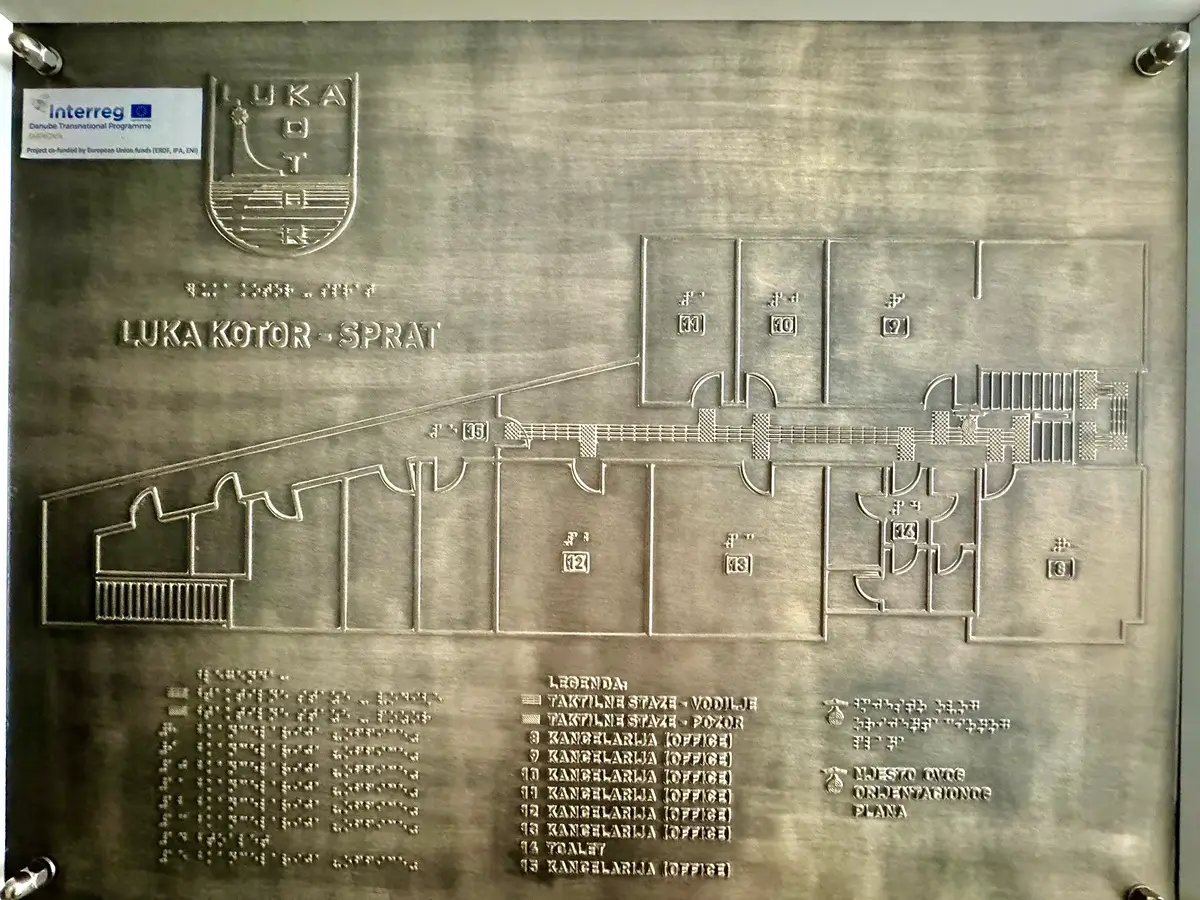
Tactile Maps Available
Raised-relief port maps with Braille labels at counter and information points
100% Accessible
All ticket purchasing methods fully accessible with guide dog spaces
Free Personal Assistance
Custom and police communication assistance and boarding guidance
Accessible Maps and Navigation Tools
Large-print and tactile maps are available at enterance inside the terminal. These maps feature raised-relief surfaces showing boarding areas, facilities, and accessible routes with Braille labels. Staff at the counter provide detailed verbal descriptions of port layout and can supply portable for independent navigation.
Staff Training & Clear Communication
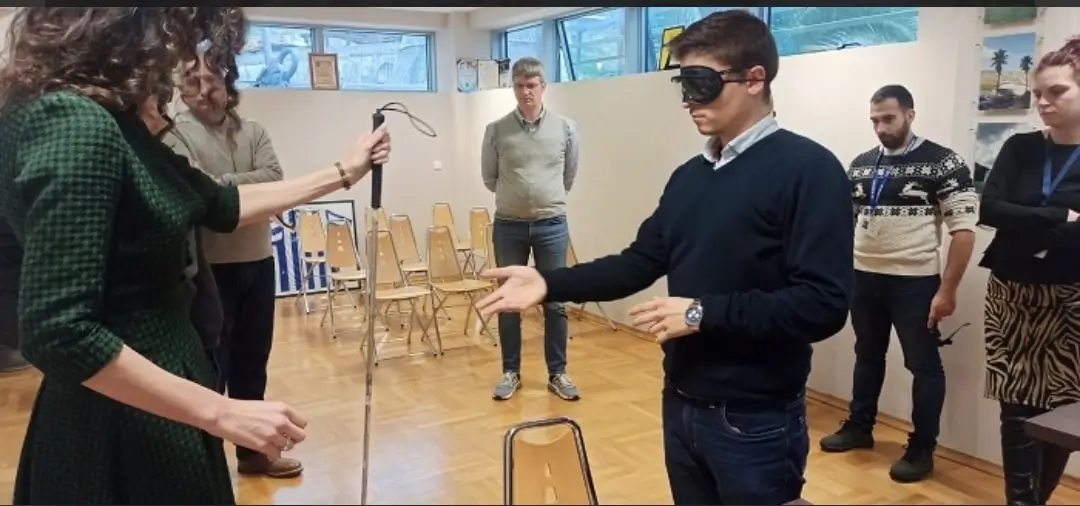
Counter staff undergo specialized training in disability awareness and accessible communication techniques. They are trained to speak clearly, face passengers when communicating, and provide detailed verbal descriptions of ticket options, departure times, and boarding procedures. Staff understand the importance of not raising their voice unnecessarily and focus on articulating words clearly while using descriptive language. When assisting passengers with visual impairments, staff describe the layout of port and terminal.
Access to the Interior of Boats and Ships
Access and travel routes from the port/wharf to the transport vessel

Fully Accessible Port Walkways
Our port infrastructure features comprehensive wheelchair-accessible walkways connecting terminal facilities to all vessel boarding areas. Every route has been designed with appropriate gradients, clear signage, and assistance services to ensure safe and dignified access to all transport vessels.
Wheelchair Accessible
Direct Vessel Access
Adapted Walkway Areas
The port features three main accessible zones: Terminal to Pier A (passenger ferries), Terminal to Pier B (cargo/vehicle ferries), and Terminal to Pier C (cruise vessels). All walkways have 2.5m minimum width with 1:20 maximum gradient, non-slip surfaces, and continuous handrails on both sides.
- All three pier access routes fully wheelchair accessible
- Weather-protected walkways with overhead canopies
Landmark Signposting System
Clear directional signage system with distinct landmarks: Blue Tower (Pier A), Red Lighthouse (Pier B), and Green Harbor Building (Pier C). High-contrast signs every 50m with tactile maps and Braille directions. Colored guidance strips on walkway surfaces correspond to destination colors.
- Color-coded landmark system for easy navigation
- Tactile guidance strips matching destination colors
Adjustable accessible gangways to vessels
Level Differences & Gangway Considerations
Gangways to vessels feature hydraulic adjustment systems to minimize level differences. Maximum gradient maintained at 1:15 for wheelchair accessibility. Some vessels may have 10-15cm level differences at entry points, addressed with portable ramps and staff assistance.
Level Management
- Hydraulic gangway adjustment for tide levels
- Portable ramps for minor level differences
- Non-slip surfaces throughout gangway length
Safety Features
- Safety rails on both sides of all gangways
- Emergency communication points every 25m
- Staff stationed at each gangway during boarding
Advance Boarding Assistance
Request boarding assistance at ticket purchase through our reservation system, phone booking, or in-person at ticket counters. Assistance includes wheelchair escort, luggage help, and priority boarding access.
Trained Boarding Staff
All boarding staff complete 40-hour accessibility training covering wheelchair assistance, communication techniques, emergency procedures, and dignity-focused customer service for passengers with locomotor disabilities.
Quayside Lift Systems
Two hydraulic passenger lifts at Piers A and B accommodate up to 8 passengers and wheelchairs. Platform lifts at Pier C handle level differences up to 3 meters. All lifts feature voice announcements and emergency communication.
Free assistance with full insurance coverage
Free Assistance Service & Insurance Coverage
All transport and assistance services for disabled passengers are provided completely free of charge as mandated by EU port accessibility regulations. Comprehensive insurance coverage protects passengers during all assistance activities including boarding, transfer, and emergency situations.
Cost Structure
- All assistance services completely free
- No advance payment or deposits required
- Wheelchair and mobility equipment use included
Insurance Protection
- Full liability coverage during assistance
- Equipment damage protection included
- Emergency medical response coverage
Moving through the ship
Designated Wheelchair Spaces
All vessels feature specially designated areas for wheelchair users including reserved seating zones, accessible cabin areas, and priority positioning spaces on passenger decks.
Accessible Restaurants
Restaurant and dining areas accessible via level pathways with no steps, wide aisles between tables, and accessible seating options throughout all meal service areas.
Open Deck Access
All passenger decks accessible through level corridors and wide doorways, with safety railings and non-slip surfaces for secure wheelchair navigation.
Accessible Cabins
Specially adapted sleeping cabins with wider doorways, accessible bathrooms, and appropriate space for wheelchair maneuvering and transfers.
Wheelchair Accessible Areas Throughout Vessels
Our fleet includes comprehensive wheelchair accessibility across all passenger areas. Main deck lounges, restaurant facilities, outdoor viewing decks, accessible cabin accommodations, and passenger service counters are all connected by level pathways with no steps or barriers. Wide corridors (minimum 1.2m) and automatic doors ensure independent navigation throughout the vessel. Elevator access connects all passenger decks on multi-level ferries.
Level Access Between All Major Areas
All accessible areas maintain consistent floor levels with no steps between restaurants, lounges, deck areas, and cabin corridors. Where level differences are unavoidable, portable ramps are provided by crew members. Main passenger routes feature tactile guidance strips, clear signage, and adequate lighting for safe navigation. Emergency assembly areas include designated wheelchair positions with direct access routes.
Accessible Spaces by Vessel Area
Passenger Lounges
Spacious seating areas with designated wheelchair spaces, accessible restrooms nearby, and level access from all entry points throughout the journey.
Vehicle Deck Access
Accessible routes to vehicle decks for passengers who need to access their cars during the voyage, with staff assistance available for safety.
Service Counters
Information desks, gift shops, and passenger service areas all accessible with lowered counter sections and clear approach pathways.
Safety Areas
All emergency assembly points include designated wheelchair positions with direct, unobstructed access routes from all passenger areas.
Vessel Type Information at Ticket Purchase
At the time of ticket purchase, detailed vessel information is provided including the specific ship type, accessibility features available, cabin configurations, and onboard facilities. Our booking system displays accessibility ratings for each vessel, descriptions of wheelchair-accessible areas, elevator availability, and any access limitations. This information is available through our website, mobile app, phone booking service, and at ticket counters, ensuring passengers with disabilities can make informed decisions about their journey and request appropriate assistance in advance. Vessel accessibility diagrams and deck plans are available upon request to help plan movement throughout the ship.
On-board restaurant and accessible dining
Wheelchair Accessible Dining Features
- Accessible tables: Tables at 80cm height with removable chairs and 70cm knee clearance underneath
- Wide aisles: 1.5m spacing between table rows allows easy wheelchair navigation throughout dining area
- Trained staff: Waiters and bar staff trained in disability communication and assistance techniques
- Carrying assistance: Staff help carry food and drinks to tables for passengers who use hands for wheelchair operation
- Room service option: Full menu available for delivery to cabins and common areas via phone or app
- Direct delivery: Staff trained to take orders and deliver meals directly to any location on vessel
Accessible Table Layout
Restaurant tables positioned at appropriate height with removable chairs and wide aisles between seating areas for easy wheelchair access and maneuvering.
Staff Assistance Service
Trained waiters and bar staff provide comprehensive support including carrying food and drinks, menu assistance, and personalized service for dining comfort.
Room Service & Delivery
Complete dining menu available for delivery to cabins and common areas, with staff trained to accommodate specific accessibility needs and preferences.
Ordering Options for Cabin & Common Areas
Passengers with locomotor disabilities can order restaurant meals through multiple convenient methods: dedicated cabin phone service (dial 1-DINING), accessible mobile app with voice commands, text message ordering system, or by pressing the assistance call button in cabins and common areas. All ordering systems feature large text options, voice guidance, and simplified navigation for easy use.
Direct Service for Wheelchair Users Unable to Reach Restaurant
When passengers cannot physically access the restaurant area, our trained staff provide complete direct service including menu consultation at your location, order taking, meal preparation coordination, and prompt delivery with all necessary utensils and beverages. Staff are trained to accommodate specific dietary needs and ensure meals are served at appropriate temperature and presentation standards.
Accessible Dining Services
Ordering Methods
Cabin Phone: Dial 1-DINING for direct restaurant service
Mobile App: Accessible ordering app with voice commands
Text Messaging: SMS ordering system for convenient
access
Call Button: Cabin and common area assistance buttons
In-Person: Staff visit locations for menu consultation
Service Features
Carrying Assistance: Staff help transport food and drinks to
tables
Menu Reading: Verbal menu descriptions and
recommendations
Direct Delivery: Meals delivered to any vessel location
Dietary Support: Accommodation for special dietary
requirements
Flexible Timing: Service available during all dining hours
Accessible Tables
1.5m wide aisles and 80cm height tables with knee clearance
Trained Staff
Waiters help carry food and provide accessibility support
Room Service
Full menu delivery to cabins and common areas available
The sanitary facility on board the ship
Complete Accessibility Features
Our onboard toilet facilities are fully wheelchair accessible with wide entrances, spacious interiors, comprehensive grab bar systems, and emergency alert capabilities for complete independence and safety.
Wide Entrance
95cm door width with no thresholds or steps
Turning Space
2.1m diameter for full wheelchair rotation
Safety Features
Grab bars on both sides and accessible sink
Emergency Alert
Accessible emergency button from wheelchair position
Wheelchair Accessibility Details
All onboard toilet facilities feature 95cm wide doors that open outward with lever handles, ensuring easy wheelchair access without any raised thresholds or steps. The interior provides 2.1m diameter turning space for complete wheelchair maneuverability and safe positioning. Grab bars are installed on both sides of the toilet bowl (horizontal at 80cm height and vertical extending 12cm beyond toilet front) with a wall-mounted sink featuring 70cm clearance underneath for seated access. Emergency call buttons are positioned at two heights (40cm and 90cm) within reach from wheelchair position, connecting directly to ship staff for immediate assistance.
Accessibility Features
Door & Entrance
Width: 95cm door opening for wheelchair access
Operation: Outward opening with lever handles
Threshold: Completely level entrance with no steps
Clearance: No raised barriers or obstacles
Access: Smooth transition from corridor to toilet
Interior Space & Equipment
Turning Radius: 2.1m diameter for full wheelchair
rotation
Grab Bars: Both sides of toilet with horizontal and
vertical supports
Sink Access: 70cm clearance underneath for wheelchair
approach
Emergency Button: Accessible from wheelchair at 40cm and
90cm heights
Safety Features: Non-slip flooring and adequate lighting
No Barriers
Level entrance with 95cm wide door and no thresholds
Full Turning
2.1m space allows complete wheelchair maneuverability
Emergency Alert
Call buttons accessible from wheelchair position
Useful procedures to be implemented to provide the correct assistance
Assistance Request at Ticket Purchase
Passengers with locomotor disabilities can request comprehensive assistance directly during ticket purchase through all available booking channels - online platform, mobile app, phone reservations, and in-person at ticket counters. The booking system allows specification of mobility requirements, wheelchair type preferences, and special accommodation needs, ensuring proper preparation before arrival at the port.
Rapid Information Transmission System
Critical assistance information flows seamlessly from ticket counter to port operations center and directly to vessel crew within 15 minutes of booking confirmation. Our integrated communication system ensures all relevant staff - from boarding personnel to onboard crew - receive detailed passenger assistance requirements, creating a coordinated support network throughout the entire journey.
Comprehensive Crew Training Program
All port staff and vessel crew complete mandatory 40-hour accessibility training covering individualized assistance techniques for diverse locomotor disabilities. Training includes wheelchair handling, transfer procedures, communication methods, emergency protocols, and dignity-focused service delivery. Staff learn to assess individual needs and provide customized support while maintaining passenger independence and respect. Regular refresher training ensures consistent, professional assistance standards across all personnel.
Priority Boarding & Complete Vessel Access
Passengers with locomotor disabilities enjoy priority boarding privileges and unrestricted access to all vessel areas including restaurants, lounges, decks, and cabin facilities through dedicated assistance procedures.
Priority Boarding
First access to vessels with dedicated assistance lanes
Full Vessel Access
Guaranteed access to all public and private areas onboard
Personalized Support
Individual assistance based on specific mobility needs
Coordinated Care
Seamless staff communication ensuring consistent support
Implementation Procedures
Booking & Communication Process
Assistance Request: Available during all ticket purchase
methods
Requirement Specification: Detailed mobility needs
documentation
System Integration: Automatic information distribution to
all relevant staff
Confirmation Process: Passenger notification of arranged
assistance
Real-time Updates: Immediate communication of any changes
or special needs
Training & Service Standards
Individual Assessment: Staff trained to evaluate specific
assistance needs
Adaptive Techniques: Flexible support methods for different
disabilities
Emergency Procedures: Specialized protocols for safety
situations
Dignity Focus: Respectful, independence-promoting
assistance approach
Continuous Education: Regular training updates and skill
enhancement
Quality Assurance & Continuous Improvement
Our assistance procedures undergo continuous evaluation through passenger feedback systems, staff performance monitoring, and accessibility compliance audits. Regular procedure updates ensure evolving best practices in disability assistance while maintaining consistent, reliable service delivery. All staff participate in quarterly refresher training and annual certification renewal to guarantee the highest standards of accessibility support throughout the port and vessel experience.